

Vital Ecological Data
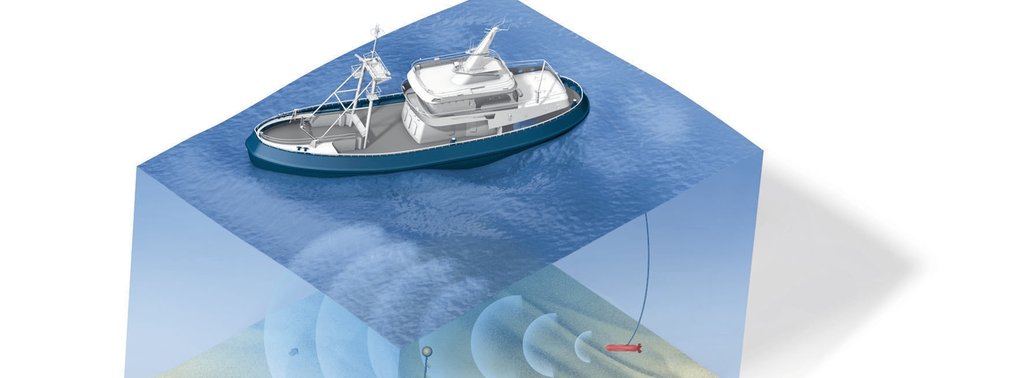
As stipulated by the national permits granted by Russia, Finland, Sweden, Denmark, and Germany, Nord Stream developed five national environmental monitoring programmes. Each has the aim of documenting the environmental impacts from the construction and operations of the pipelines in the respective jurisdictions. The national monitoring programmes are tailored to meet the requirements set by each country. More than 20 companies are conducting the surveys defined in the national Environmental and Social Monitoring Programmes (ESMPs) to determine just how, and if, the Baltic Sea's flora and fauna have been impacted by the construction of the Nord Stream twin pipeline system.
Nord Stream plans to invest approximately 40 million euros into its ESMPs to monitor any impact of the construction and operation of its pipelines through 2016.
Five Countries, Five Programmes
The programmes were implemented at the start of construction of Line 1 of the twin pipeline system in April of 2010, and will continue during the operational phase of the pipelines until 2016. The results of the monitoring have helped to verify that the national permit conditions were being met during construction, and that the environment is recovering as projected after construction.
Sixteen subjects are covered by the monitoring programme, including water quality, seabed recovery, and fish, bird and mammal populations. Certain subjects are monitored in some countries and in others not according to environmental variations and the nature of the construction work in particular areas. Samples are collected from about 1,000 survey locations along the route in Russia, Finland, Sweden, Denmark and Germany. The samples are analysed in internationally recognised laboratories. The findings are compiled in Nord Stream's annual monitoring reports and distributed to the national authorities in each of the five countries, and are also publicly available in our Library. In addition to the reports that are developed based on the monitoring results, Nord Stream is also committed to sharing its existing survey data in its Data and Information Fund.
A Solid Base
In order to classify the data that is currently being gathered, reference data of the Baltic Sea's flora and fauna prior to the construction of the pipelines was collected during numerous surveys, the first of which was carried out as early as 1995.
Monitoring results so far have confirmed that the environmental impact of construction was in line with or below the values established in the environmental impact assessments (EIA) which were developed as part of Nord Stream's application process for construction and operation permits. In some cases, the prior assessments in the EIAs have proven conservative, and the impact has been less than anticipated.